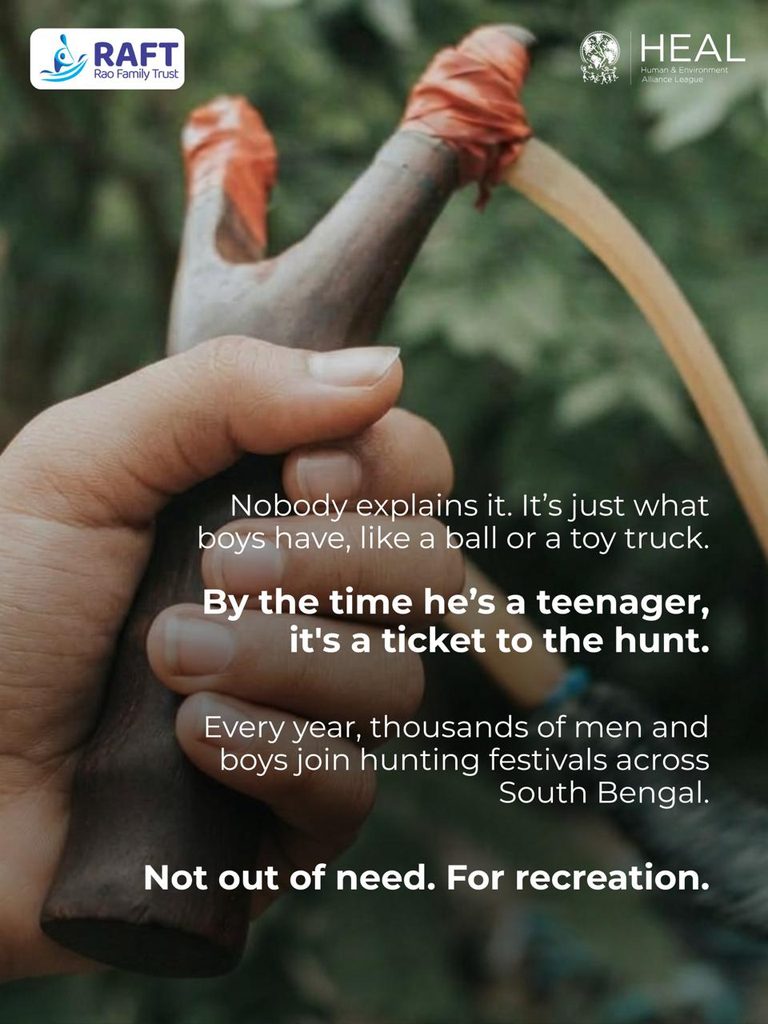
Somewhere in Jhargram tonight, a young boy is holding a catapult. We would like the next thing he holds to be a camera.
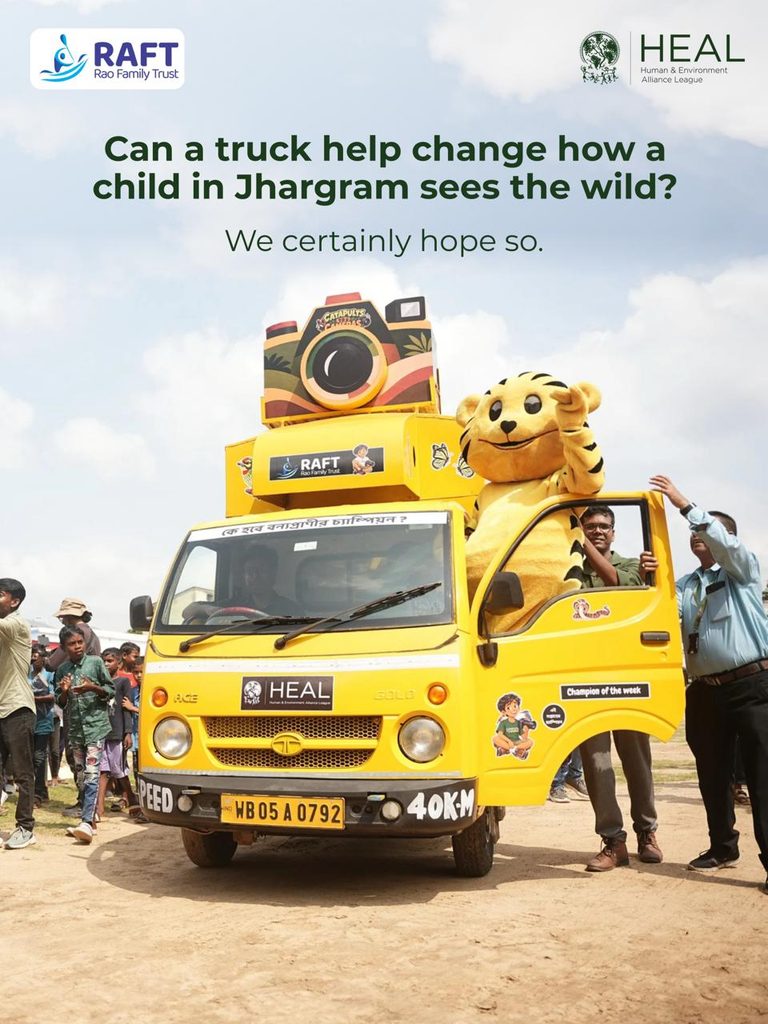
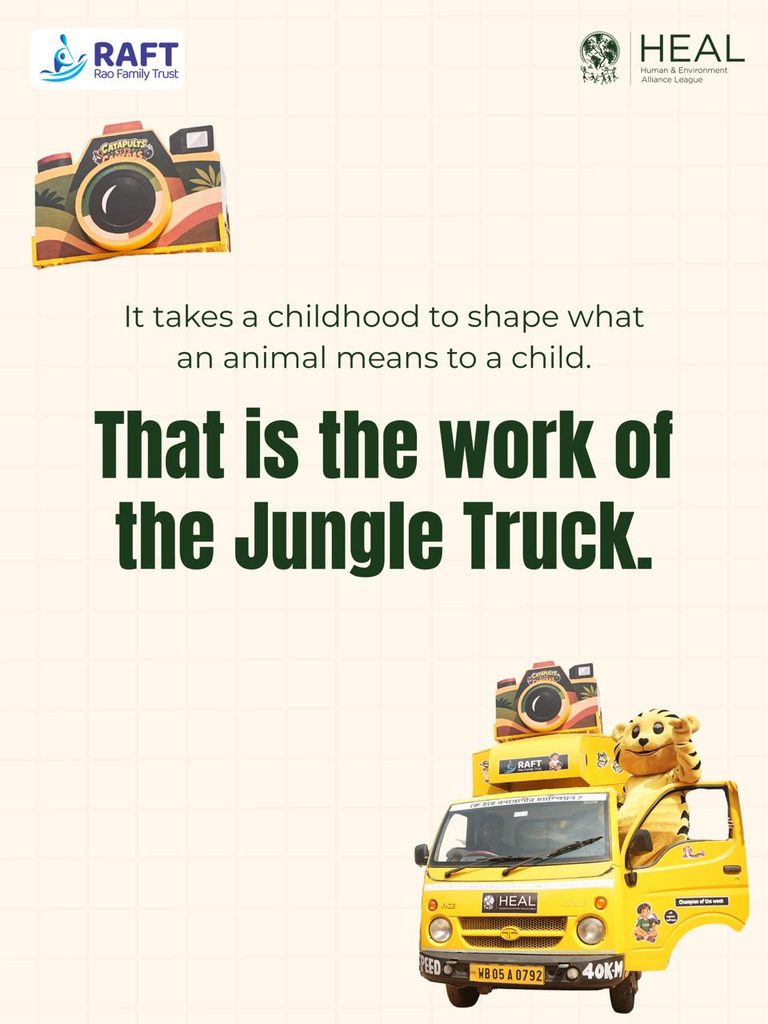
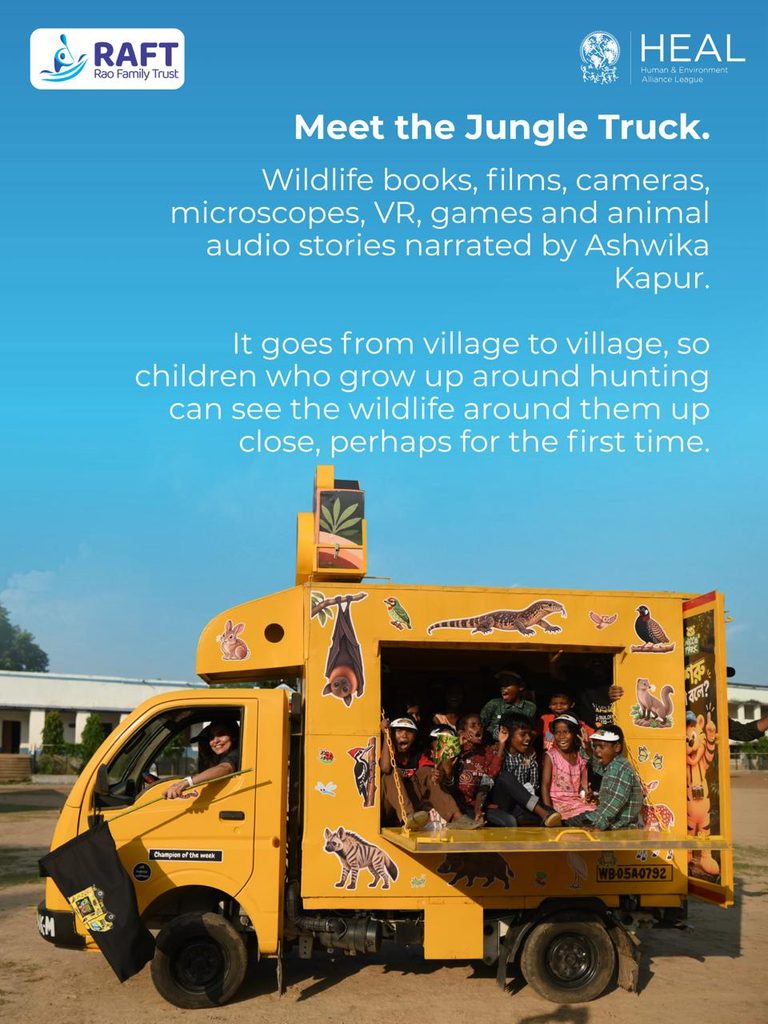
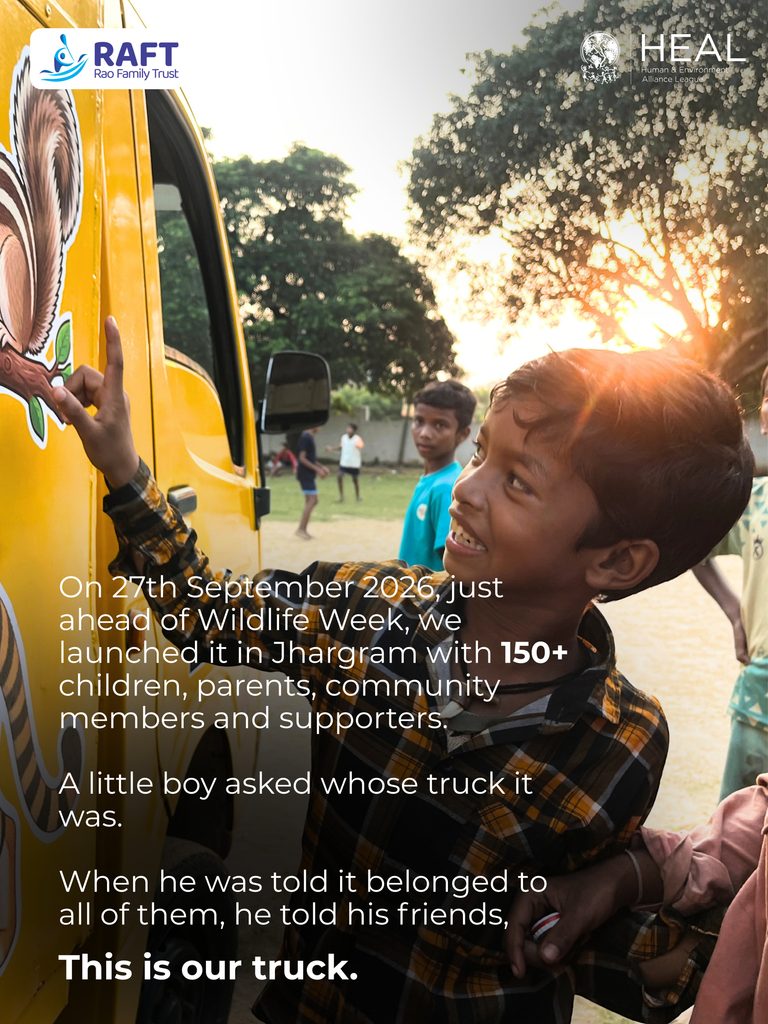
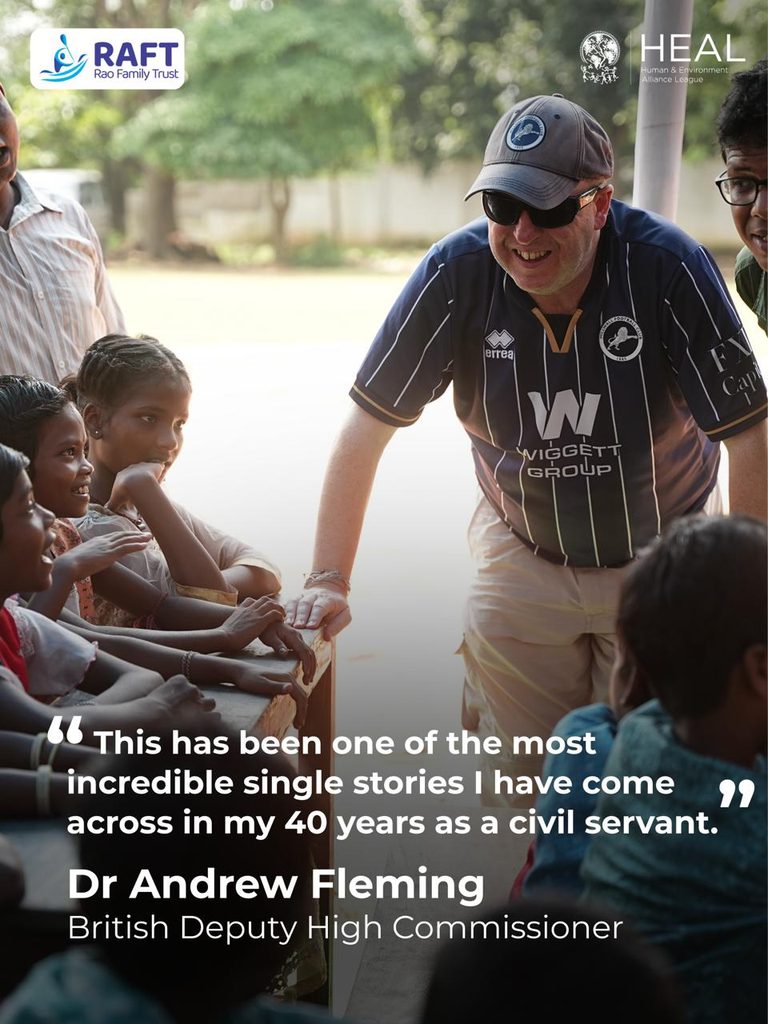
Enforcement buys us time, but education makes the change last. On 27th September 2026, just ahead of Wildlife Week, we launched the Jungle Truck outside Lalgarh Ramkrishna Vidyalaya in Jhargram. It will travel from village to village so that children who grow up around hunting can see the wildlife around them up close, perhaps for the first time.
Thank you to the Rao Family Trust, Nicco Park, the British Council and Bondhu Ek Asha for making launch day possible.
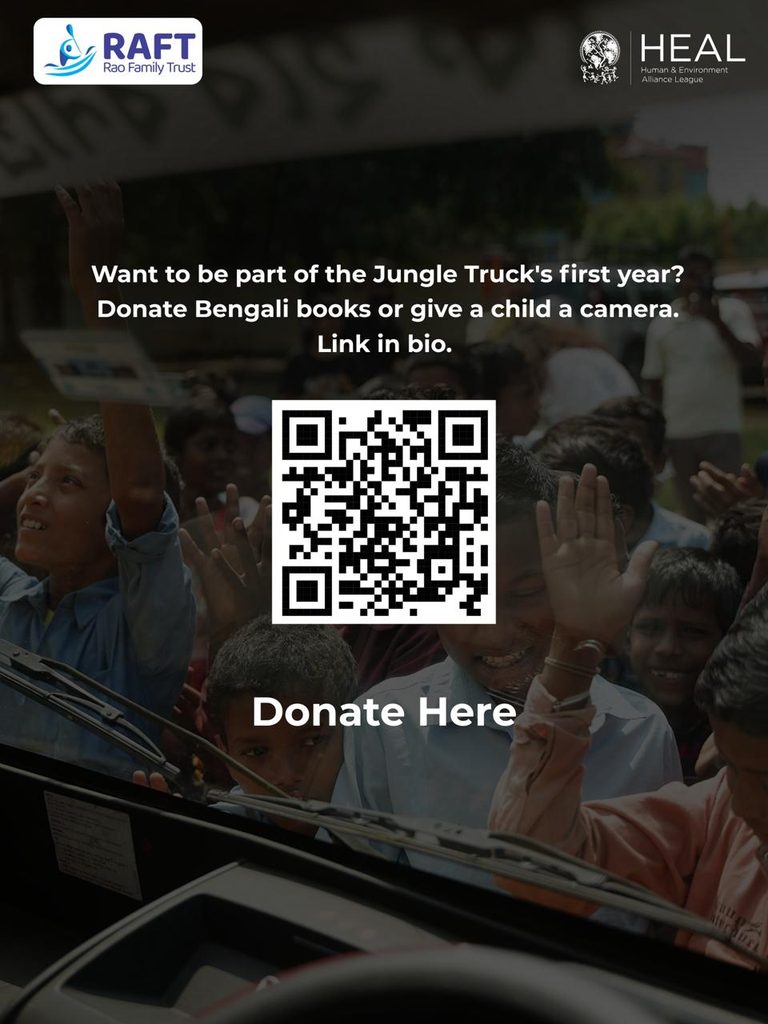
If you’d like to be part of the Jungle Truck’s first year, you can donate Bengali books for its shelves or give a child a camera.
To explore collaborations or work with us, write to us at healearth2010@gmail.com
More About Catapults to Cameras
For years, large-scale illegal hunting festivals have taken place across southern West Bengal, where hundreds of people enter forests and surrounding landscapes with traditional weapons, threatening protected wildlife.
Since 2016, HEAL has documented more than 55 such festivals across districts including Jhargram, Purulia, and Medinipur. Through field investigations, public interest litigation, and advocacy, HEAL’s work contributed to landmark Calcutta High Court judgments in 2018, 2019, and 2023, helping catalyse stronger government action and the formation of district-level Humane Committees. Hunting events in several areas have since been substantially reduced or halted.
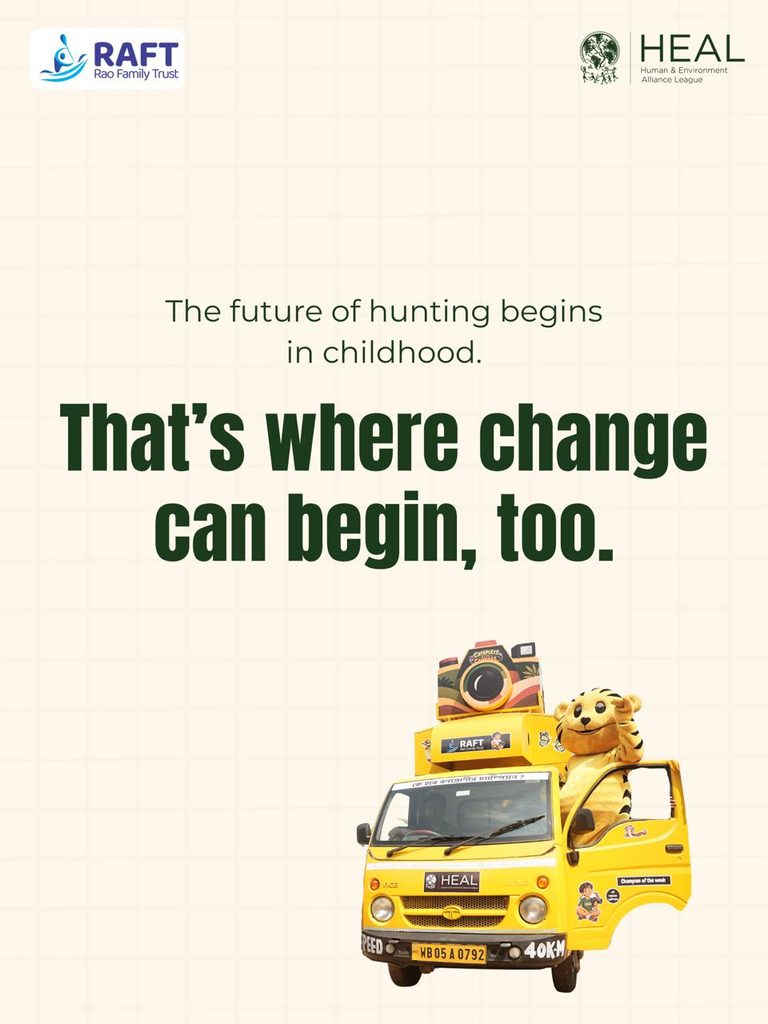
However, HEAL recognised that enforcement could only address part of the problem. For lasting change, the relationship between communities and wildlife also needed to change at its roots.
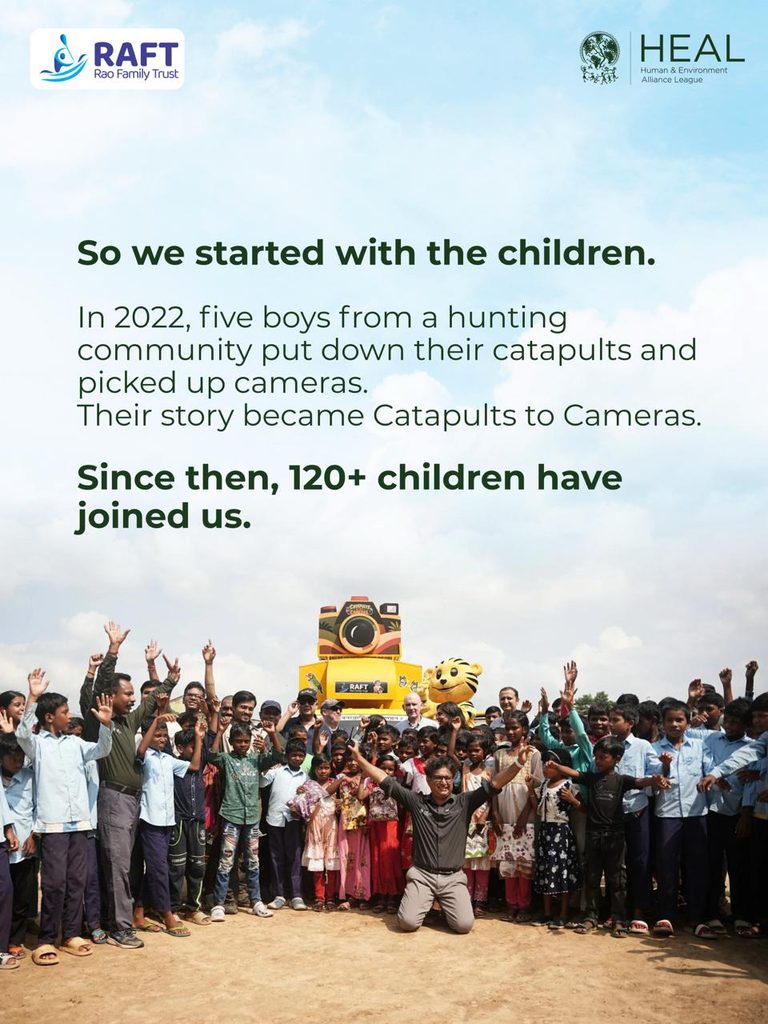
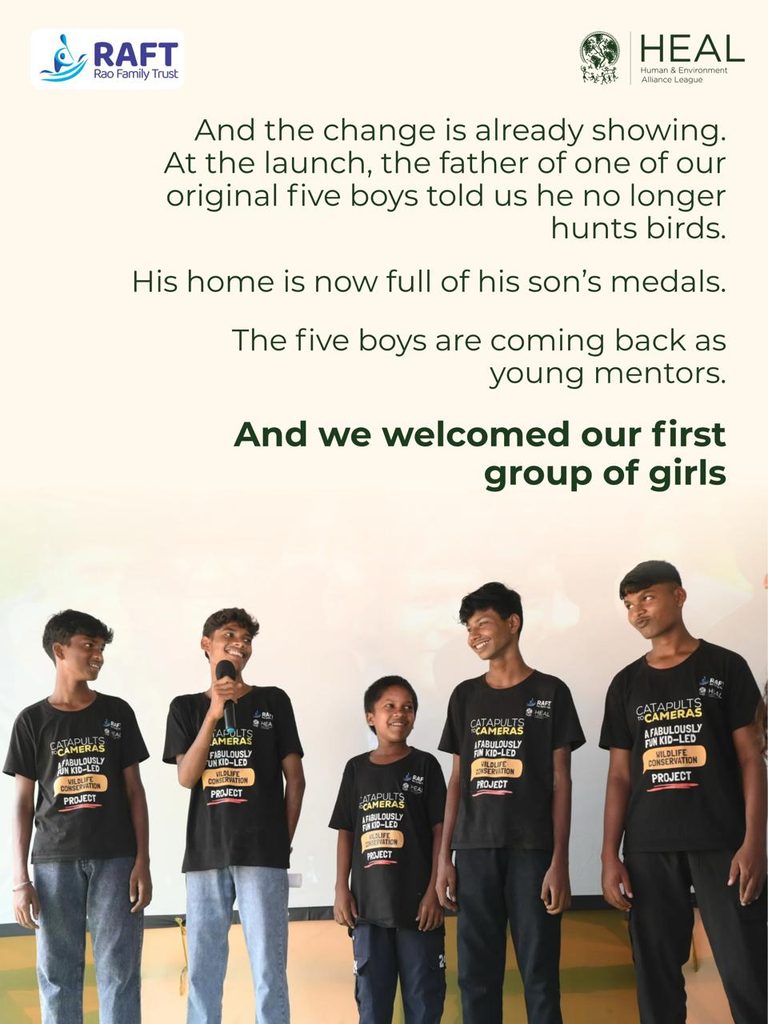
Catapults to Cameras began in 2024 as a small experiment by wildlife filmmaker Ashwika Kapur and HEAL Co-founder Suvrajyoti Chatterjee, working with five boys from Jhargram. The children were introduced to cameras and encouraged to photograph their natural surroundings, creating an alternative to the use of catapults for targeting birds and other small animals.
The experiment became the multi-award-winning documentary Catapults to Cameras and subsequently developed into a long-term conservation and nature education programme.
Today, more than 120 children have taken part in HEAL’s workshops across villages in Jhargram and Paschim Medinipur. Through photography, binoculars, wildlife films, outdoor activities, and hands-on learning, children are being given opportunities to experience wildlife differently through curiosity, observation, and appreciation.
The original five have not stepped away from the programme. Ajoy, Tarash, Surajit, Lalu, and Raja now return as junior mentors, helping younger participants learn photography and sharing their own experiences. For HEAL, their continued involvement is one of the clearest signs that the idea has grown into something that can be passed from one generation of children to the next.
The Jungle Truck is the next chapter of this initiative, taking high-quality nature education directly from village to village. Packed with wildlife books, films, cameras, games, microscopes, VR experiences, and hands-on learning activities, it will create opportunities for children to explore wildlife through observation, technology, stories, and play.
If you would like to contribute books, cameras or operational expenses for running The Jungle Truck click on the QR code below to donate,